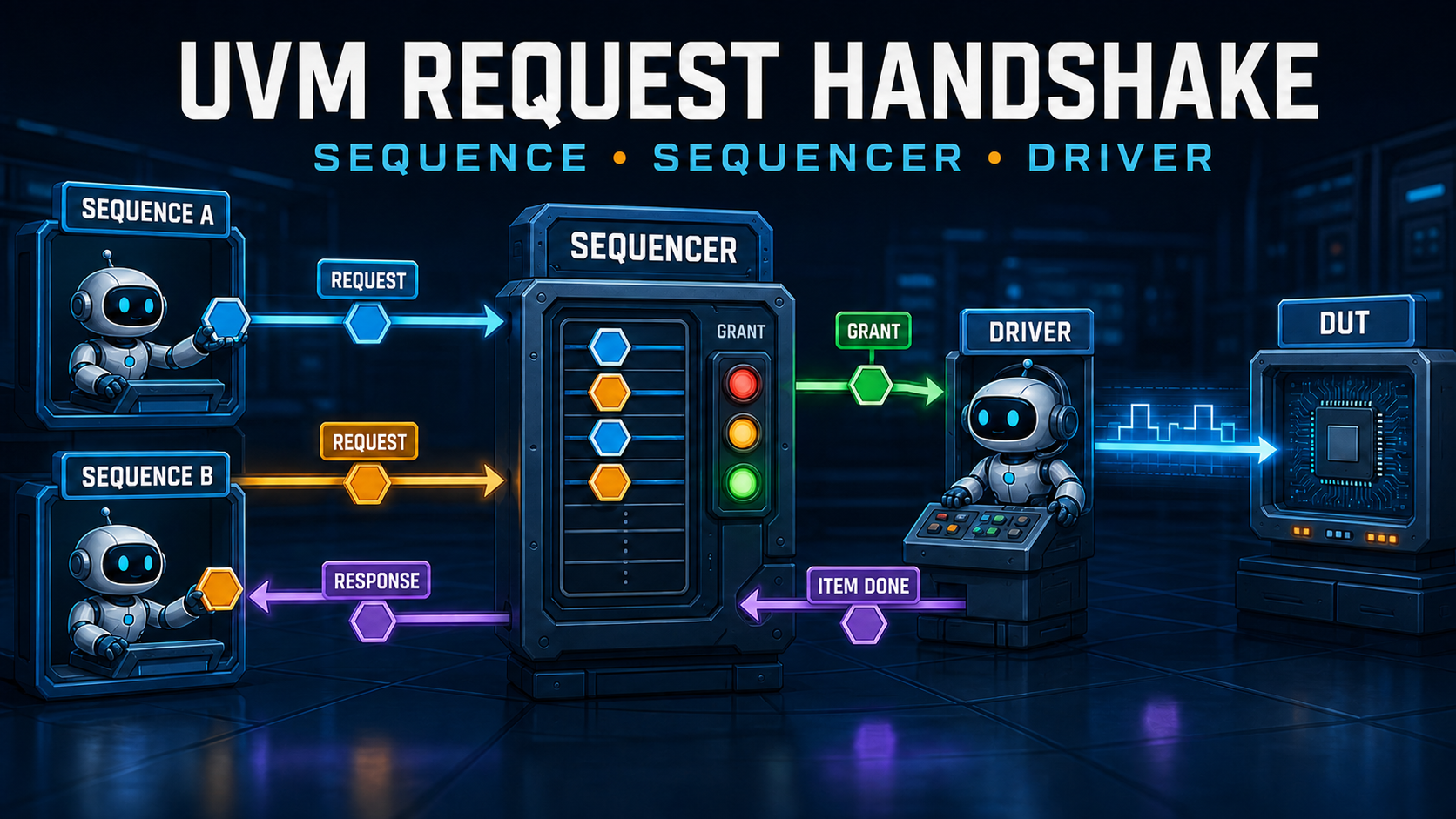
UVM Sequence, Sequencer, and Driver Communication
Follow the UVM request handshake from sequence arbitration through driver completion, response routing, reset handling, and deadlock debugging.
Bitwise journal
Deep dives, field notes, and practical explanations on SystemVerilog, UVM, architecture, and verification.
Follow the UVM request handshake from sequence arbitration through driver completion, response routing, reset handling, and deadlock debugging.
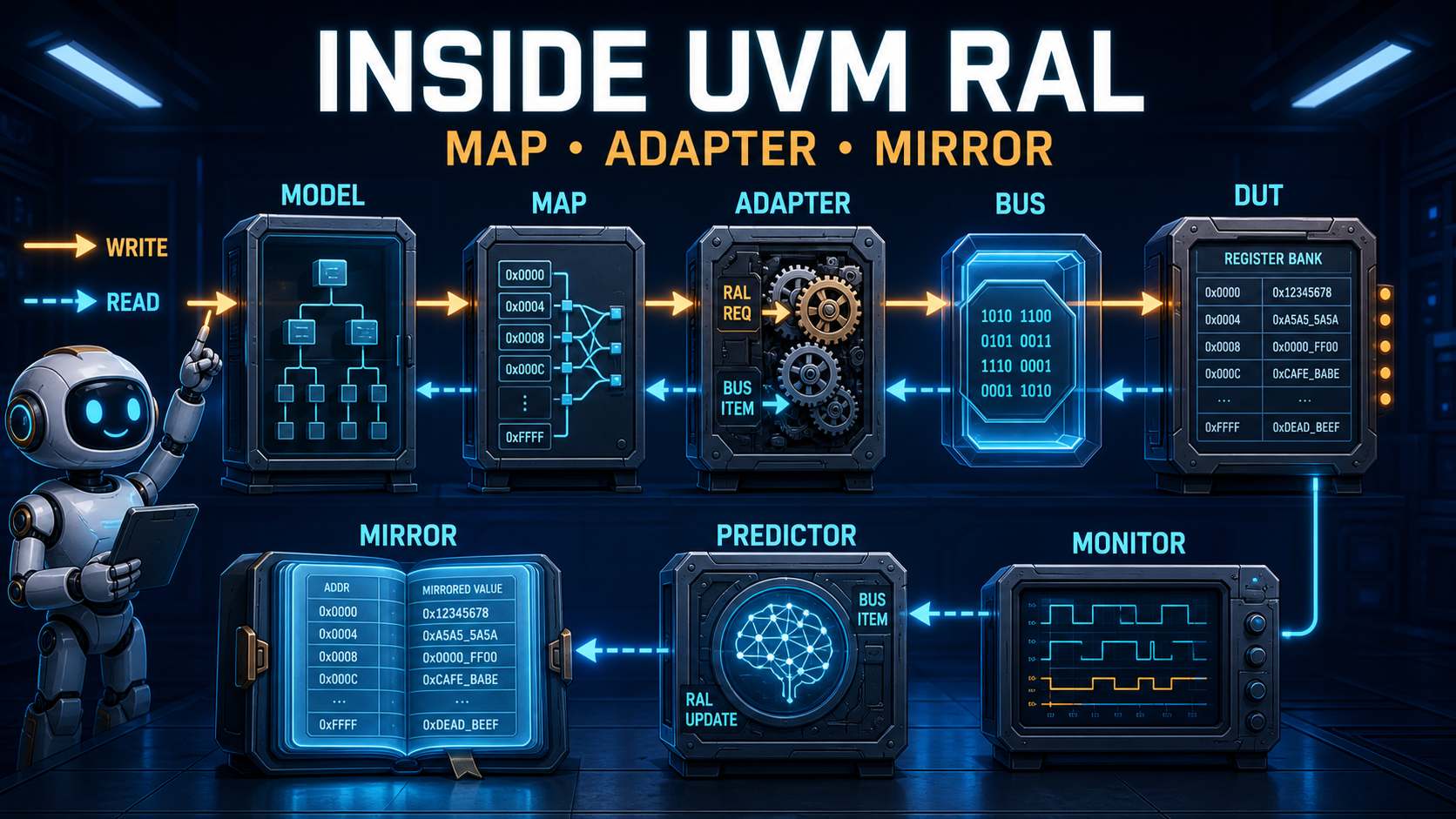
Trace a UVM RAL access through the register model, map, adapter, bus transaction, predictor, and mirror to understand where synchronization bugs arise.
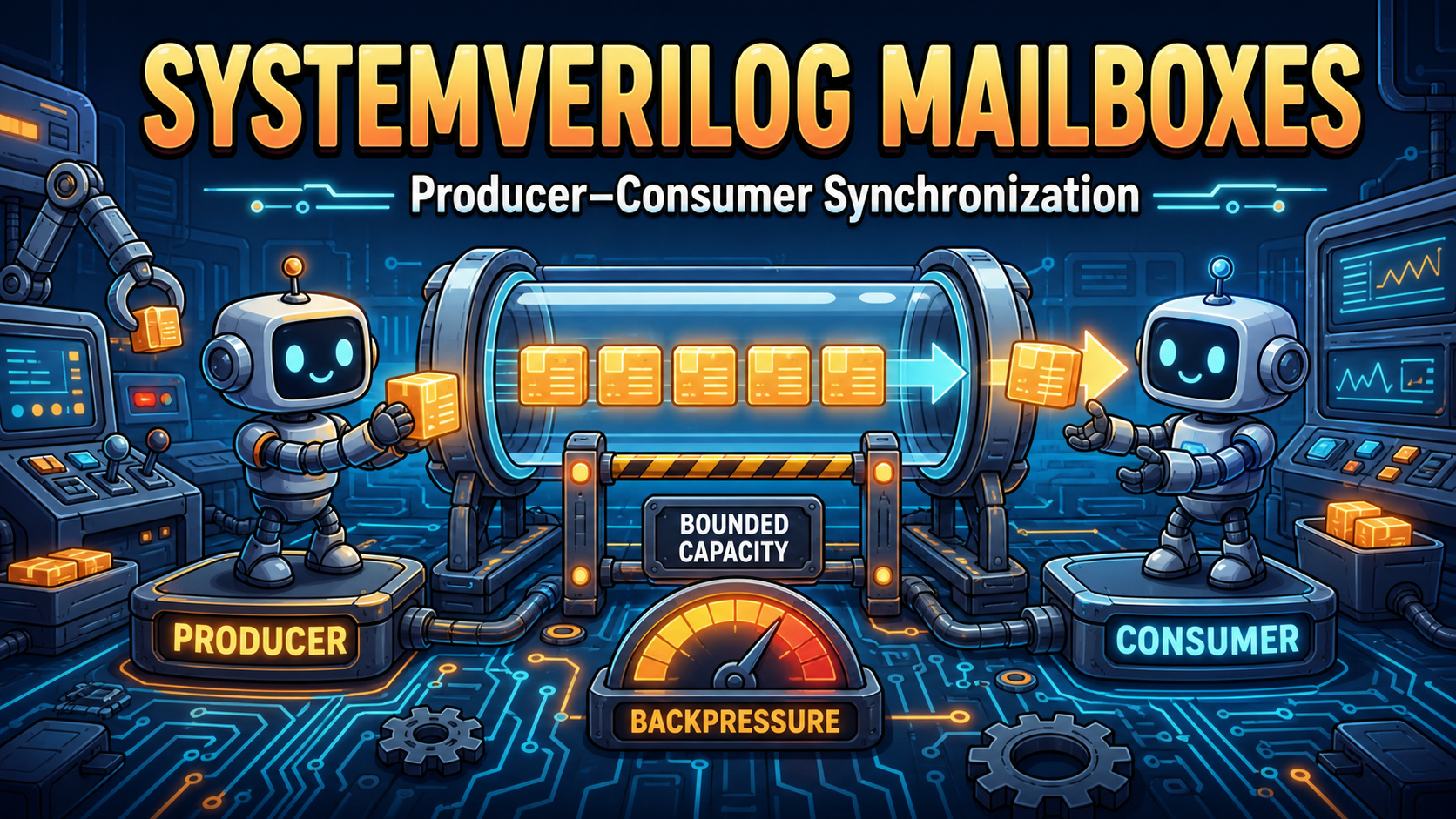
Verification components never run at the same rate. A generator can produce five transactions in zero simulation time. A driver has to wait for reset release, then clock edges, then …
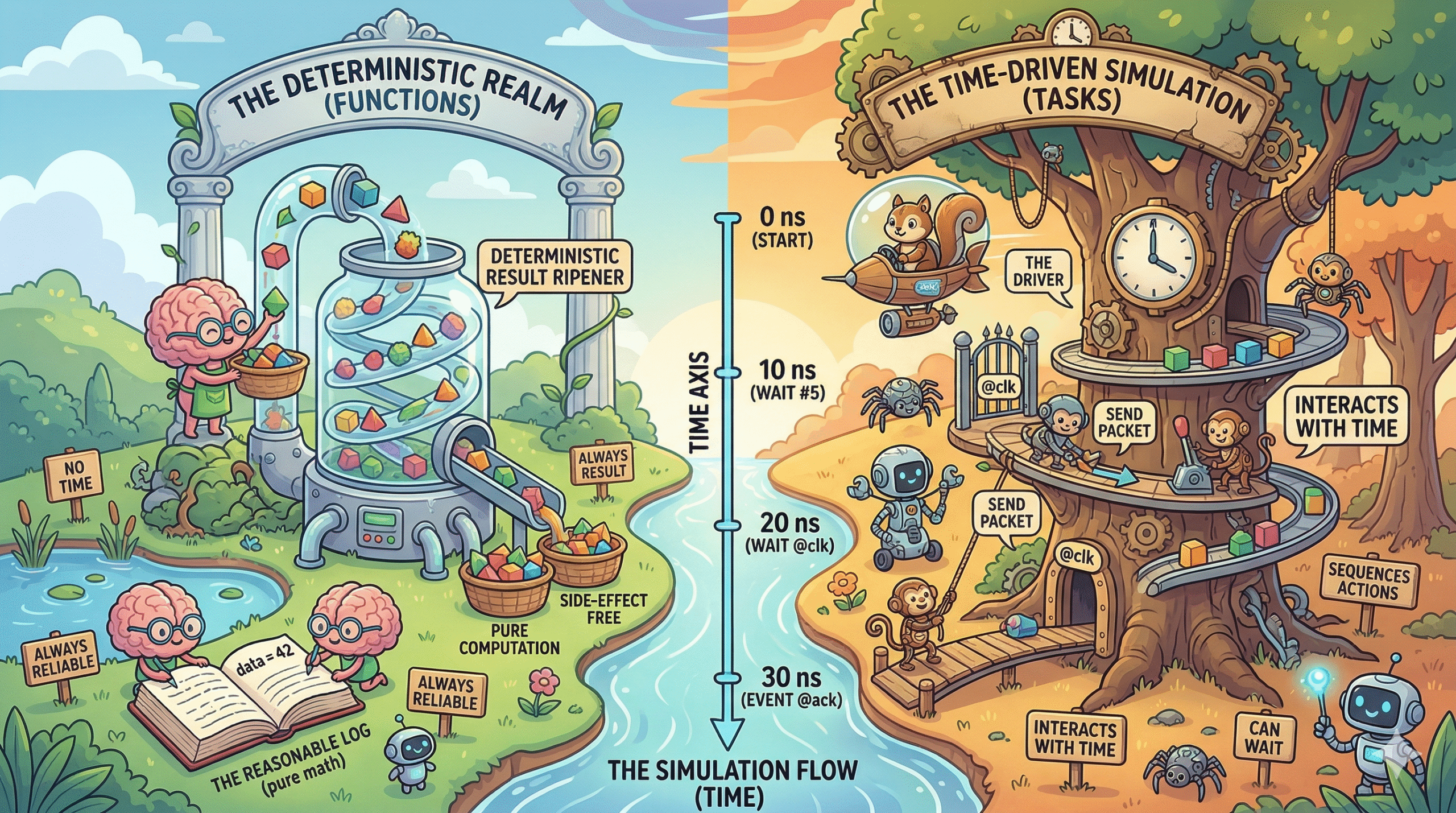
Stop Memorizing Syntax. Start Modeling Intent. When it comes to understanding SystemVerilog functions vs tasks, most engineers start with a quick checklist: functions return a value, tasks can consume time. …
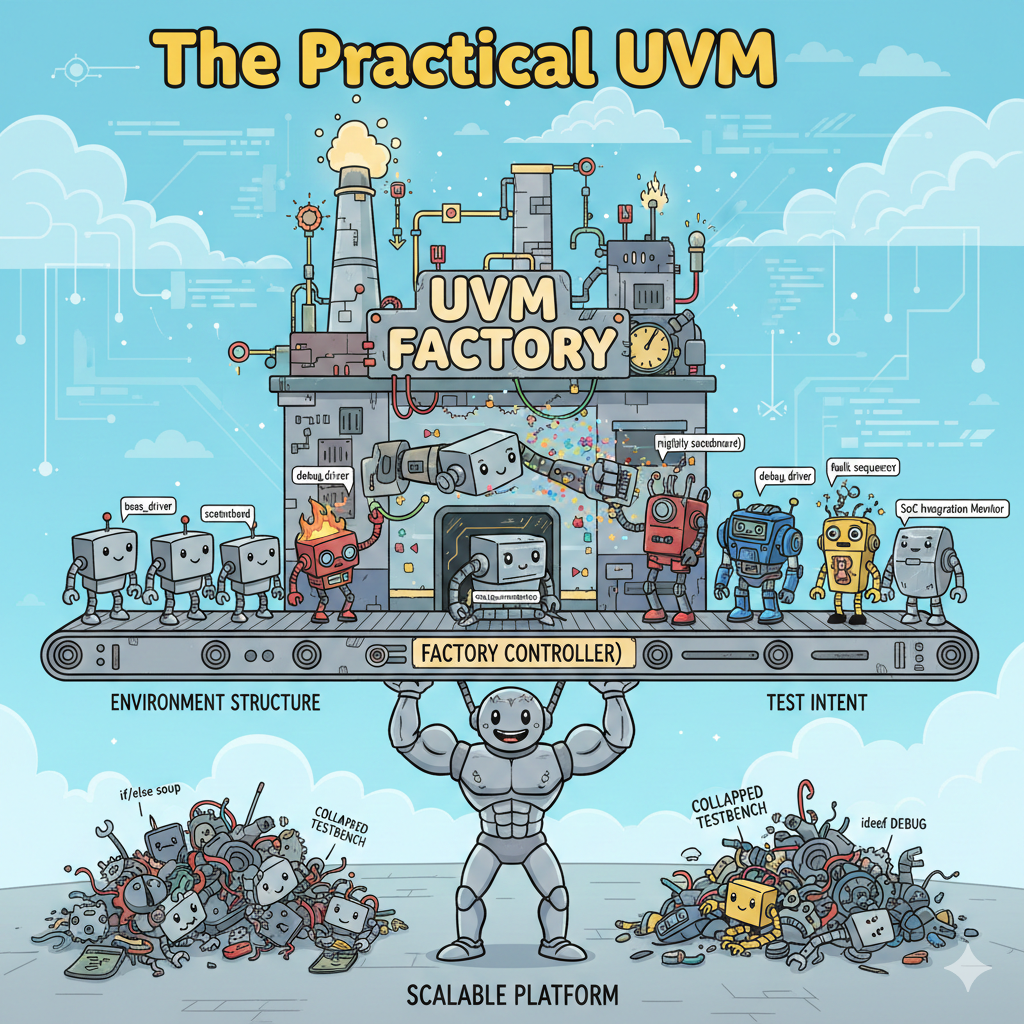
What You Actually Use Every Day If you read most explanations of the UVM factory, they begin with APIs. They explain set_type_override_by_type(), show a minimal example, and stop there. What’s …

Introduction As UVM testbenches evolve from simple setups to complex, multi-layered environments, configuration management becomes one of the most critical and confusing aspects of maintaining control and flexibility. Every testbench …

Introduction We all know the importance of Transaction Level Modelling also known as TLM in UVM. The fundamental goal of TLM is to provide communication between components in a flexible, …