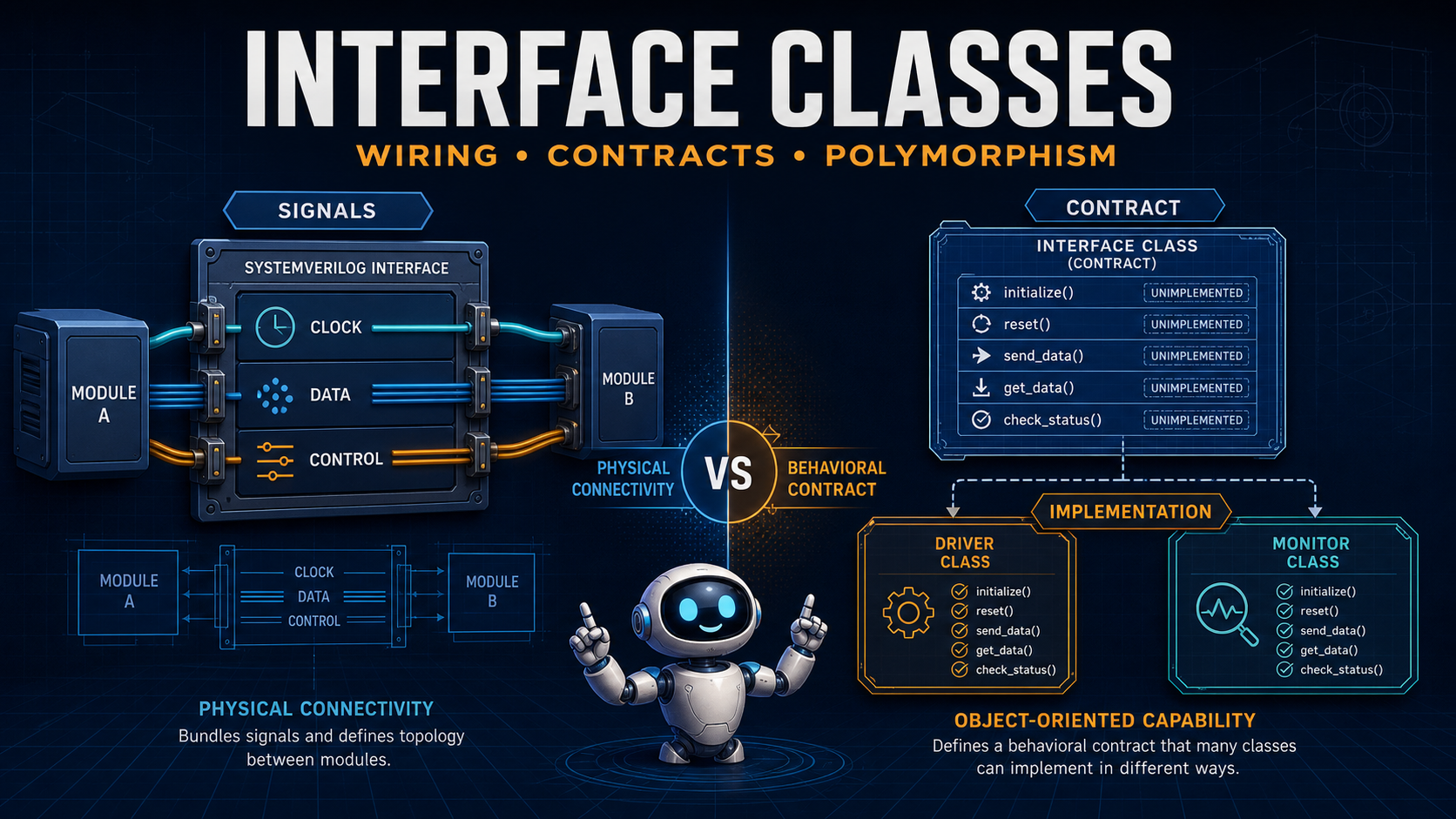
SystemVerilog Interfaces vs. Interface Classes: Wiring, Contracts, and Polymorphism
SystemVerilog interfaces describe physical connectivity; interface classes define object-oriented behavioral contracts. Learn when each abstraction fits.
Bitwise journal
Deep dives, field notes, and practical explanations on SystemVerilog, UVM, architecture, and verification.
SystemVerilog interfaces describe physical connectivity; interface classes define object-oriented behavioral contracts. Learn when each abstraction fits.
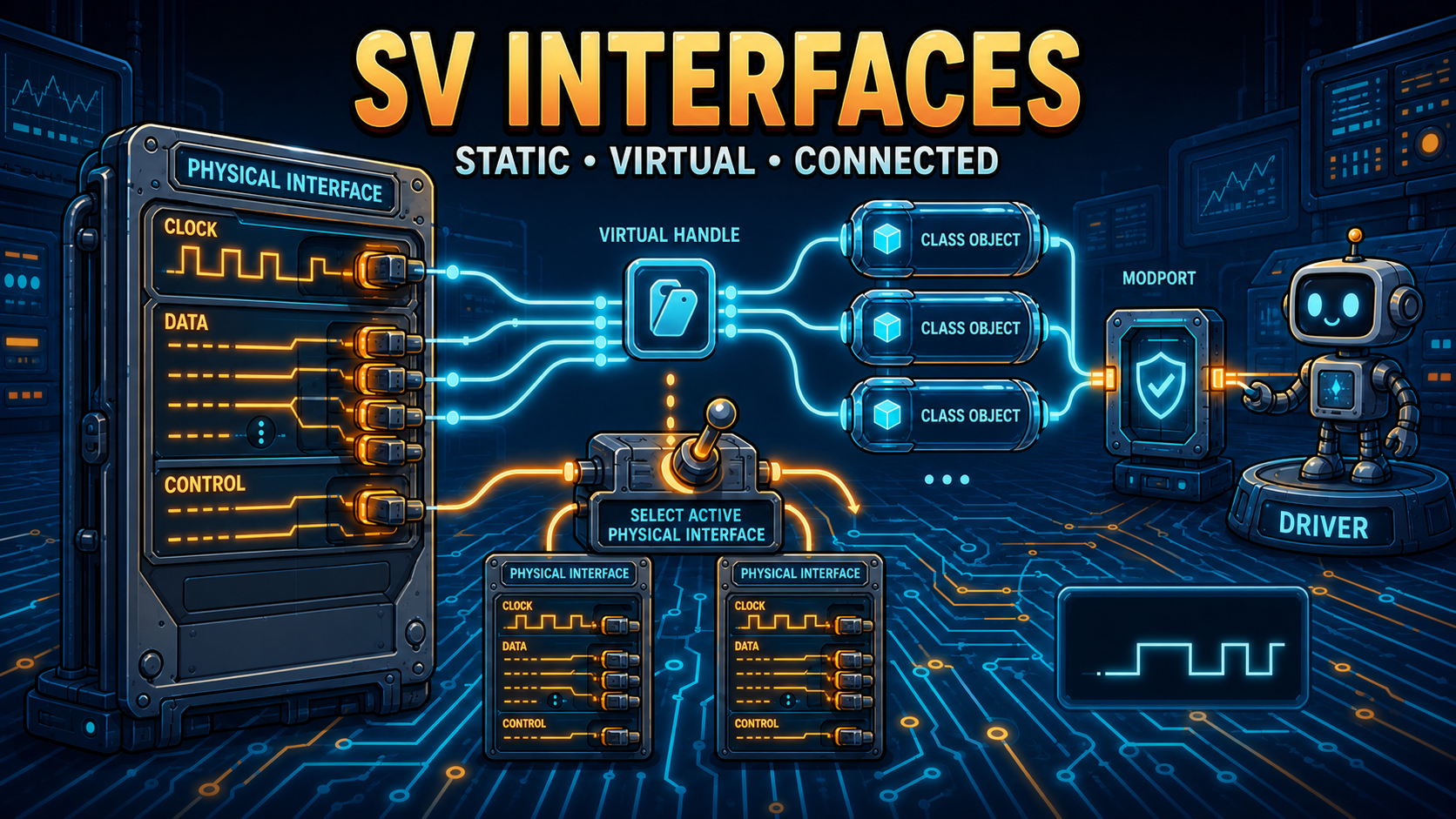
SystemVerilog interfaces bundle static signals and timing. Virtual interfaces let class-based testbench components reach those instances safely and predictably.
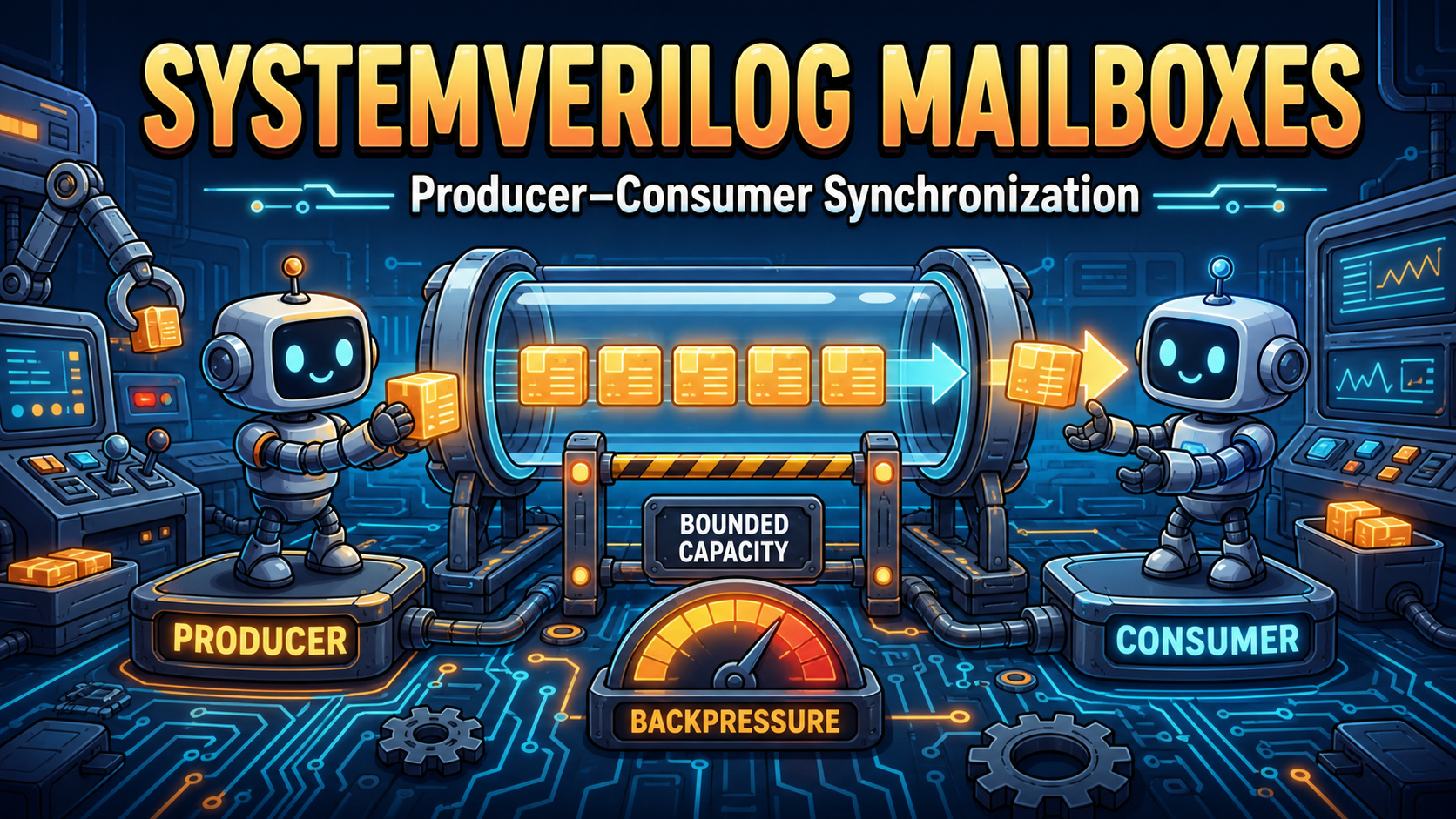
Verification components never run at the same rate. A generator can produce five transactions in zero simulation time. A driver has to wait for reset release, then clock edges, then …

Stop Memorizing Syntax. Start Modeling Intent. When it comes to understanding SystemVerilog functions vs tasks, most engineers start with a quick checklist: functions return a value, tasks can consume time. …
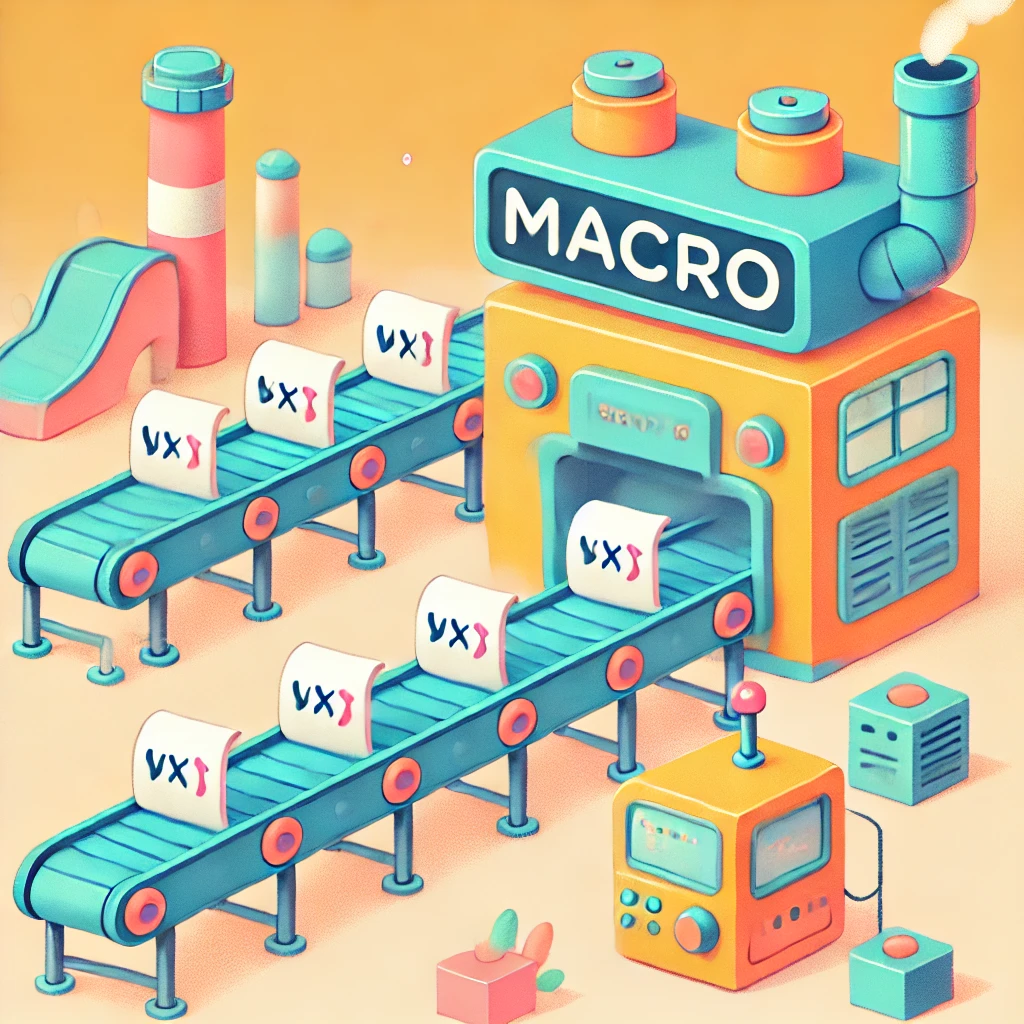
In SystemVerilog, macros provide a way to define reusable piece of code that can be inserted anywhere in your source code. SystemVerilog macros are very similar to c language macros. …

Introduction We all know the importance of Transaction Level Modelling also known as TLM in UVM. The fundamental goal of TLM is to provide communication between components in a flexible, …